
There are 4 main tendons of the shoulder (rotator cuff) that all work together to help hold the arm in place. As the shoulder is very mobile it is easy to overload and strain the tendons which can lead to shoulder tendinopathy. On a scan tendinopathy might look like micro tears or even swelling however what we know about tendons is that they are highly adaptable and given the right treatment can recover to be stronger than before! 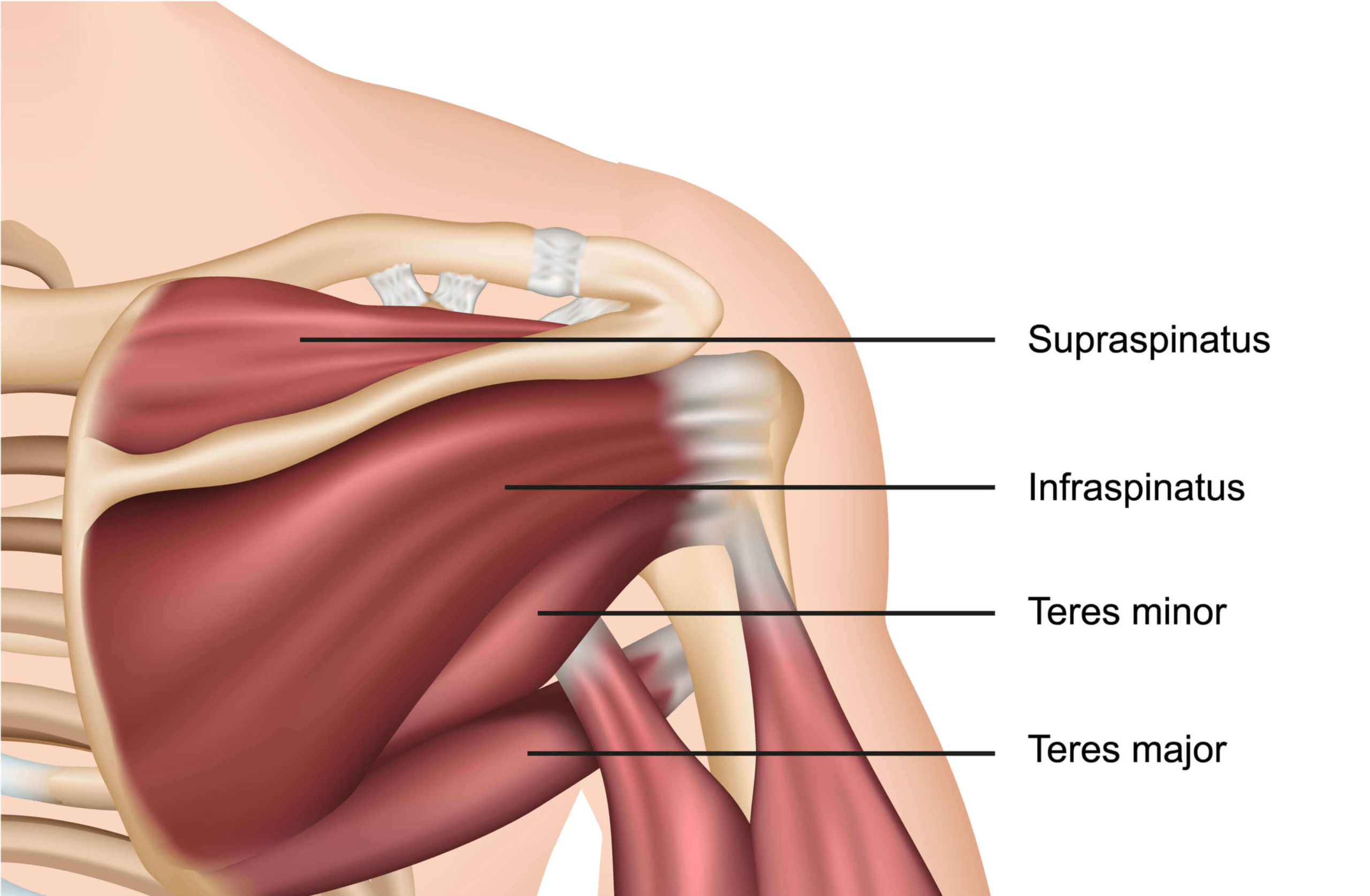
Here are some treatment options that you might consider if you have shoulder tendinopathy. We recommend combining all of these treatments for quickest results and best long term outcomes:
SHOCKWAVE – Acoustic waves are transmitted into the affected tissues to promote collagen production, increased blood supply and reduce pain. Essentially this kick starts the healing process of the shoulder tendinopathy and allows you to begin loading the tendon with a strength program. Used to be primarily reserved for persistent conditions however new research is showing great results in early intervention.
 STRENGTH PROGRAM – A must for making your tendon, surrounding muscle and nerves support you for the long run. We start with isometric (holds steady the affected tissue) contractions and as you get stronger we move more into concentric (shortens the affected tissue) and then finally eccentric (lengthens the affected tissue) load.
MYOFASCIAL RELEASE – Fascia holds the muscles throughout our body in place. If the muscles or fascia have tension they pull more at the tendons, a leading cause of shoulder tendinopathy. We have found that if the fascia and muscle component of pain is not addressed tendon issues will take longer to resolve. We recommend a combination of active cupping, massage and dry needling to support your tendon during the healing and strengthening phases.
POSTURAL CONSIDERATION – The shoulder complex is only capable of full, happy range of motion if the surrounding joints are providing it with a good position. If you have a rounded upper back, a head forward posture or rounded shoulders these problems should be addressed as part of your healing journey. We recommend muscle strength and length testing to identify where the postural problem is stemming from and addressing during the treatment and strengthening phases of your shoulder tendinopathy recovery.
If you would like more information and live close to our clinic in Mount Waverley, VIC, Australia, why not book a free assessment to get things started!